Gestalt
The Center for Psychotherapy and Education is a non-profit that promotes psychotherapy but also offers psychological counseling and education. The Center's mission is to improve quality of life and strengthen the competencies and resources of individuals and groups.
Beyond education, the Center offers its own accessible, low-cost scheme to help people find a counselor or therapist. It also organizes meetings, conferences, consultations, and training sessions at its space in downtown Belgrade.
In its practice, the Center focuses mainly on a specific form of psychotherapy — Gestalt therapy.
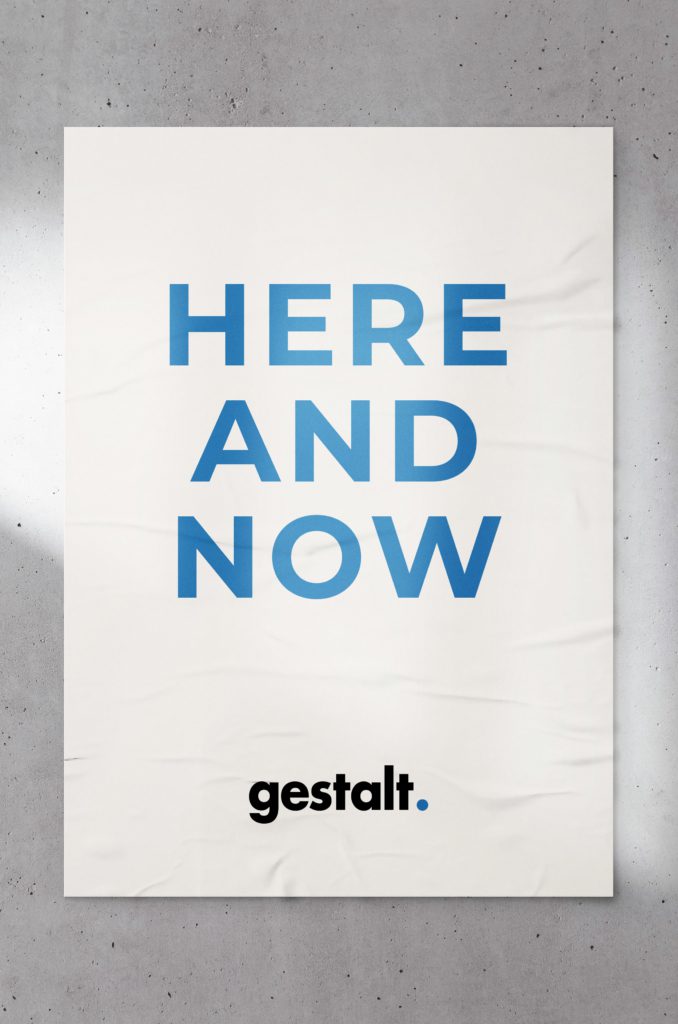
The identity centers on a treatment of the word itself, which stands for the Center's primary field of interest: Gestalt therapy. In German, Gestalt designates shape or form, but also holism — the idea that natural systems and their properties should be viewed as wholes, not as loose collections of parts.
Gestalt is closely connected to the Bauhaus art school, where Gestalt theory was studied and taught by its prominent figures: Walter Gropius, Paul Klee, Wassily Kandinsky, Josef Albers, Hannes Meyer, and Johannes Itten.
We needed a solution that would work for two key components of the organization at once — the Center itself, with its educational and publishing role, and the Gestalt counseling side of it.
We wanted both of these strong words in its branding. This decision shaped the design of the logotype, which is set in Futura, a clean but powerful typeface.
This geometric sans-serif typeface was designed by Paul Renner and released in 1927. It is based on geometric shapes, especially the circle, in the spirit of the Bauhaus design style of the period.
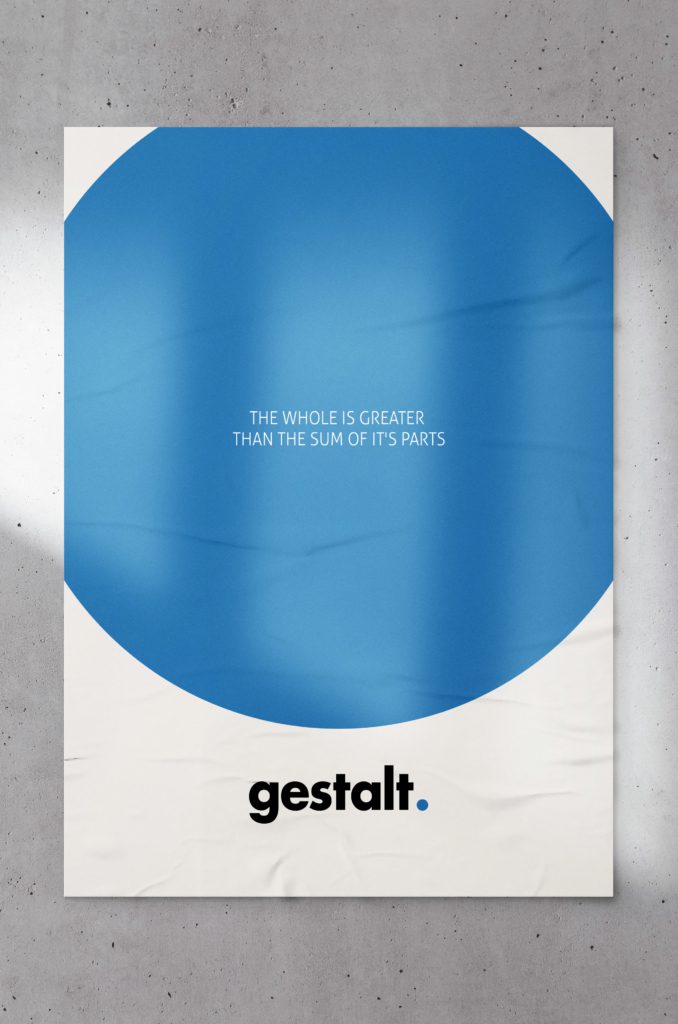
The whole is greater / than the sum of its parts